Is Impossible Burger Healthier Than Beef?
Lab-grown foods like the Incommunicable Burger correspond the ultimate disharmonize in health information: We're told that institute-based diets are healthy, merely nosotros're also told that processed foods are unhealthy. The Impossible Burger, the Beyond Burger and other faux meat products are plant-based merely highly processed.
So what'due south a person to choose? Plant-based or less processed?
First things beginning: Just because something is plant-based or vegan, that doesn't mean it's automatically healthy. White staff of life is vegan, equally are tater tots. Cookies, cakes and even grilled cheeses can be entirely plant-based. And your doctor probably isn't telling you to eat more than of those items, even if they are made of plants.
Read more than: 10 essential kitchen tools for a vegan kitchen in 2019
I'grand not hither to fustigate on plants -- I love vegetables, and I try to eat them with every repast. Just equally imitation meat burgers skyrocket to unprecedented levels of popularity, it's worth taking a closer look at what'due south actually inside constitute-based meat products and comparing the wellness implications.
To exist off-white, Impossible Foods and Beyond Meat, do not explicitly market their products equally being healthier than beef, just rather every bit a sustainable and environmentally-friendly culling to beef.
In this article, CNET covers how the 2 most mutual meat alternatives (faux beef and false chicken) nutritionally compare to their real counterparts.

Real beef vs. plant-based beef
Gone are the days of crumbly black edible bean and tofu patties. Vegans and vegetarians -- and meat eaters -- can enjoy extremely beef-similar burgers that contain no beef at all. The Impossible Burger and the Beyond Burger definitely top the fake beef popularity charts, but Kellogg, Kroger, Meatless Farm Co and other brands have followed suit with similar meatless patties.
The question is not whether these products exercise a good job at mimicking beef -- they do. The question, rather, is whether simulated beef stacks up to real beefiness in terms of wellness and nutrition. Let's compare.
100 grams (three.five ounces) of lean ground beef (x% fatty) contains:
- 217 calories
- 12 g fat (v g saturated)
- ninety mg cholesterol
- 70 mg sodium
- 0 g saccharide
- 0 thousand fiber
- 26 g protein
Proceed in mind that the caloric and fat values of ground beef increase as the fat pct increases.
The 4-ounce Incommunicable Burger two.0 comes pretty close to beef, nutritionally:
- 240 calories
- fourteen g fat (8 thou saturated)
- 0 thousand cholesterol
- 370 mg sodium
- 9 g carbohydrate
- 3 g cobweb
- nineteen g protein
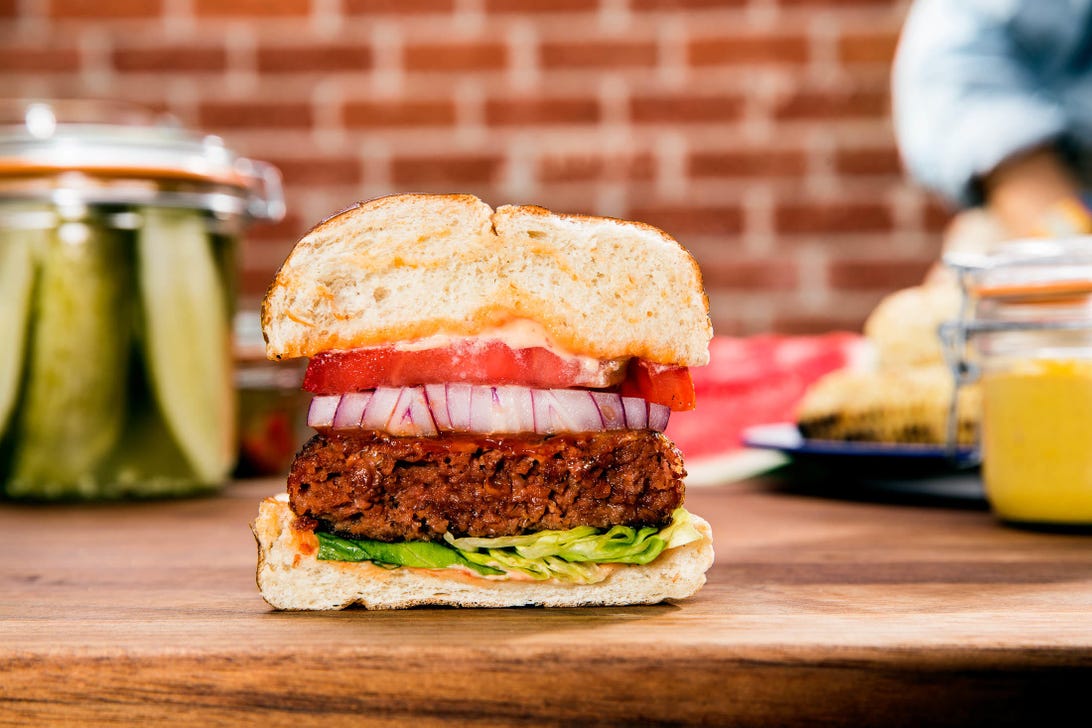
A cantankerous section of a Beyond Meat Burger.
Beyond MeatThe Impossible Burger also boasts a pretty impressive micronutrient profile, but keep in heed these nutrients don't all occur naturally: Impossible Foods fortifies their burgers to boost the nutrient content.
While the macronutrient profiles of real beef and Impossible ground beef are comparable, their levels of processing are not. Because information technology doesn't occur in nature, plant-based beef is highly candy, comprised of a multifariousness of institute ingredients, colorings, extracts and preservatives to mimic the taste, texture and odour of real beefiness.
For instance, the Impossible Burger contains soy protein, a foreign ingredient called soy leghemoglobin, sunflower and coconut oils, methylcellulose, yeast extract, cultured dextrose, food starch and more. And so if your goal is to eat less processed foods, existent beef is the style to become (not including items like hot dogs, which are as well very processed).
One particular business about faux beefiness is the sodium content, as pointed out by Dr. Andrew Weil, an integrative medicine md and creator of the praised Anti-Inflammatory Nutrition. One version of the Impossible Burger -- the Impossible Whopper at Burger Rex -- contains 1,240 milligrams of sodium, which is even more than than what's in a regular Whopper.
Related: The ultimate Beyond Burger vs. Impossible Burger taste test

Watch this: Which found-based burger is all-time? Impossible Burger vs....
Real chicken vs. vegan chicken
Chicken is arguably i of the healthiest foods on this planet. It's poly peptide-packed and low in fat (as long as you lot eat skinless portions), and it contains ample iron and B vitamins. The USDA Dietary Guidelines for Americans recommends choosing poultry as a poly peptide source, and wellness organizations like the American Heart Association have dubbed chicken 1 of the healthiest proteins you can cull from.
Of course, you tin turn whatsoever inherently healthy food into an unhealthy nutrient. Eating craven deep-fried or on a sandwich slathered with processed condiments renders it far less healthy than chicken lonely. The best way to swallow chicken? Roasted, grilled or baked in a healthy fat, such as extra virgin olive oil.
The nutrition facts for a skinless, 3-ounce serving of chicken breast are pretty stellar:
- 102 calories
- 2 g fat (2 thou saturated)
- 53 mg cholesterol
- 46 mg sodium
- 0 g carbohydrate
- 0 g fiber
- xix m protein
- 4% daily value of atomic number 26
Now permit'southward take a look at constitute-based "chicken." Many large food brands manufacture false chicken products, including Gardein and Kellogg. Since we used the nutritional values for a skinless baked chicken breast, nosotros'll compare the item closest to that.
Vegan food make Quorn makes meatless craven fillets, formerly called chik'n cutlets. Out of all the vegan craven products I could find, this product looks most like a chicken breast straight out of the box.

Quorn'south plant-based chicken alternative looks quite like real chicken, only it's made of an ingredient chosen "mycoprotein," a type of mucus found in soil.
Quorn/KrogerThis chicken-less chicken cutlet is made generally of an ingredient chosen mycoprotein, a very dainty-sounding fashion of proverb "the processed cellular mass that is obtained from the filamentous fungus Fusarium venenatum strain PTA-2684," which is what the visitor noted in its application to the USDA for auction as a food production in the The states, according to a 2002 Wired article.
Basically, Quorn's chicken products are made of a fermented and modified fungus, to which the company adds egg whites and other ingredients -- so this one isn't actually vegan, just it's still not meat.
Nonetheless, the patties don't seem unhealthy from a strictly nutritional standpoint. They're depression in calories, fatty and cholesterol, and high in cobweb, only they don't offer almost as much poly peptide as real chicken.
Here are the nutrition facts for one serving of Quorn meatless craven fillets (69 grams, or about 2.five ounces):
- 60 calories
- ane g fat (0 chiliad saturated fatty)
- 0 yard cholesterol
- 190 mg sodium
- 6 1000 carbohydrate
- v one thousand fiber
- 9 1000 protein
Other chicken substitutes are fabricated from plant-based ingredients like soy poly peptide, wheat protein, and other textured vegetable proteins. Like beef substitutes, chicken substitutes tend to comprise long lists of ingredients, because these foods need additives to remain fresh and tasty.
Gardein'southward Meatless Chik'n Strips, for instance, include wheat gluten, canola oil, methylcellulose, yeast extract, spud starch, distilled vinegar, added colors and more.
Read more: Kroger announces its answer to the Impossible and Across Burgers
Plant-based meat and real meat each have their own pros and cons. Y'all should cull which to consume based on your dietary preferences and values.
CNETThe consensus on real meat versus simulated meat
There's no real scientific consensus on this topic even so, every bit vegan meat is too new for health officials to brand a decision -- that's something scientists can do only after enough of peer-reviewed, 3rd-party (significant not conducted by a vegan meat visitor) research has accumulated.
And even then, things tin alter: The terminal couple generations of Americans have spent their lives fearing red meat, only to find out that saturated fatty really isn't as bad as nosotros thought.
Also, the decision to eat vegan meat in identify of real meat is more than than a question of diet. Many people determine to eat a vegan diet out of moral and ethical values, such as animal welfare or environmental wellness.
Eating a plant-based meat substitute a few times a calendar week probably won't hurt you, merely similar eating beef a few times a week won't hurt you. Faux meat is best treated like real meat: Utilize it every bit a protein source, not as a substitute for vegetables.
The information contained in this article is for educational and informational purposes just and is not intended as wellness or medical advice. E'er consult a physician or other qualified wellness provider regarding any questions you may take about a medical condition or health objectives.
Source: https://www.cnet.com/health/nutrition/is-the-impossible-burger-healthier-than-beef/
0 Response to "Is Impossible Burger Healthier Than Beef?"
Post a Comment